
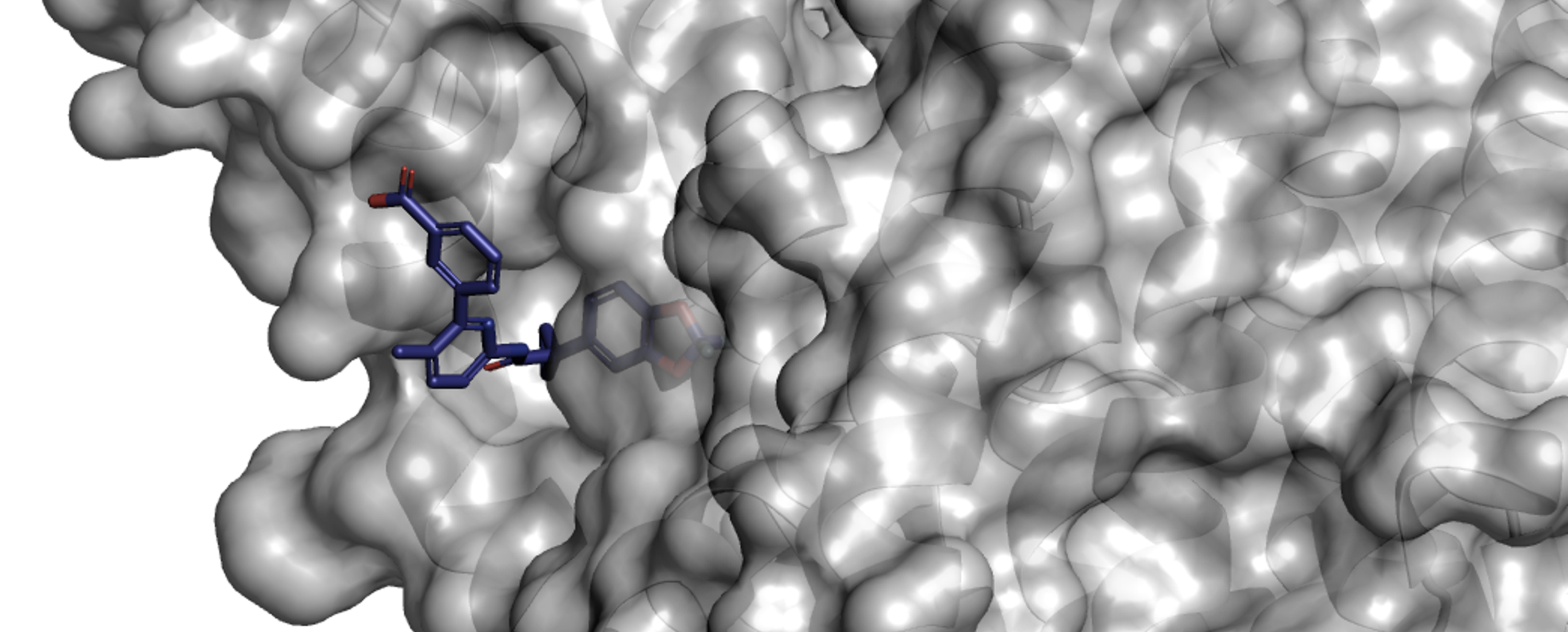
Rare diseases place a substantial burden on national healthcare systems and represent a diagnostic odyssey for countless families worldwide. Unfortunately, most rare diseases remain without a cure, as developing targeted therapies is often deemed financially unfeasible by pharmaceutical companies. In contrast, drug repurposing—utilizing existing medications—presents a more pragmatic and cost-effective alternative. A specific subset of rare diseases, known as conformational rare diseases, is linked to protein misfolding and can be treated with pharmacological chaperones, many of which are repurposed drugs. This database originates from our initiative to create a predictive model assessing the susceptibility of missense variants to chaperone treatment. As we compiled the dataset for our machine learning model, we decided to expand it into a comprehensive database. The result of this effort is CIRCLE.
CIRCLE (Chaperones in Rare Conformational disEases) is a comprehensive resource offering access to data on pharmacological chaperones (PCs) used in the treatment of rare conformational diseases, enriched with chemical information. In addition to PCs, CIRCLE provides information on rare conformational diseases, along with their associated protein targets. For each target, known disease-associated missense variants from the Uniprot database have been collected and annotated with chemical, structural and physical features. Whenever available, the outcomes of efficacy tests (in vitro assays and/or clinical trials) performed on individual variants have been compiled from the literature.
Visit the page of our group here.
Email address: cbsb.dsb@uniroma1.it
To report issues and bugsDamiano Parrone, Università degli Studi di Roma Sapienza, Rome (RM), Italy. Email address: damiano.parrone@uniroma1.it
Federico Mari, Università degli Studi di Roma Foro Italico, Rome (RM), Italy. Email address: federico.mari@uniroma4.it
For information on the current state of our projectDamiano Parrone, Università degli Studi di Roma Sapienza, Rome (RM), Italy. Email address: damiano.parrone@uniroma1.it
Allegra Via, Università degli Studi di Roma Sapienza, Rome (RM), Italy. Email address: allegra.via@uniroma1.it
Stefano Pascarella, Università degli Studi di Roma Sapienza, Rome (RM), Italy. Email address: stefano.pascarella@uniroma1.it
Anna Marabotti, Università degli Studi di Salerno, Salerno (SA), Italy. Email address: amarabotti@unisa.it
Our ISS RefererClaudio Carta, Istituto Superiore di Sanità, Rome (RM), Italy. Email address: claudio.carta@iss.it
OSRA: Optical Structure Recognition
SMILES generation.
DSSP
Assignment of secondary structure and solvent accessibility.
PDB2PQR
Calculation of partial charge.
APBS
Calculation of electrostatic potential.
MAESTRO
ΔΔG prediction.
ThermoMPNN
ΔΔG prediction.
RaSP
ΔΔG prediction.
ConSurf
Calculation of conservation score.
Literature
Tran ML, Génisson Y, Ballereau S, Dehoux C. Second-Generation Pharmacological Chaperones: Beyond Inhibitors. Molecules. 2020 Jul 9;25(14):3145. doi: 10.3390/molecules25143145. PMID: 32660097; PMCID: PMC7397201.
Weinreich SS, Mangon R, Sikkens JJ, Teeuw ME, Cornel MC. Orphanet: een Europese database over zeldzame ziekten [Orphanet: a European database for rare diseases]. Ned Tijdschr Geneeskd. 2008 Mar 1;152(9):518-9. Dutch. PMID: 18389888.
Topham CM, Smith JC. Tri-peptide reference structures for the calculation of relative solvent accessible surface area in protein amino acid residues. Comput Biol Chem. 2015 Feb;54:33-43. doi: 10.1016/j.compbiolchem.2014.11.007. Epub 2014 Dec 3. PMID: 25544680.
Zamyatnin AA. Protein volume in solution. Prog Biophys Mol Biol. 1972;24:107-23. doi: 10.1016/0079-6107(72)90005-3. PMID: 4566650.
Kyte J, Doolittle RF. A simple method for displaying the hydropathic character of a protein. J Mol Biol. 1982 May 5;157(1):105-32. doi: 10.1016/0022-2836(82)90515-0. PMID: 7108955.
The UniProt Consortium , UniProt: the Universal Protein Knowledgebase in 2023, Nucleic Acids Research, Volume 51, Issue D1, 6 January 2023, Pages D523–D531, https://doi.org/10.1093/nar/gkac1052
Martin FJ, Amode MR, Aneja A, Austine-Orimoloye O, Azov AG, Barnes I, Becker A, Bennett R, Berry A, Bhai J, Bhurji SK, Bignell A, Boddu S, Branco Lins PR, Brooks L, Ramaraju SB, Charkhchi M, Cockburn A, Da Rin Fiorretto L, Davidson C, Dodiya K, Donaldson S, El Houdaigui B, El Naboulsi T, Fatima R, Giron CG, Genez T, Ghattaoraya GS, Martinez JG, Guijarro C, Hardy M, Hollis Z, Hourlier T, Hunt T, Kay M, Kaykala V, Le T, Lemos D, Marques-Coelho D, Marugán JC, Merino GA, Mirabueno LP, Mushtaq A, Hossain SN, Ogeh DN, Sakthivel MP, Parker A, Perry M, Piližota I, Prosovetskaia I, Pérez-Silva JG, Salam AIA, Saraiva-Agostinho N, Schuilenburg H, Sheppard D, Sinha S, Sipos B, Stark W, Steed E, Sukumaran R, Sumathipala D, Suner MM, Surapaneni L, Sutinen K, Szpak M, Tricomi FF, Urbina-Gómez D, Veidenberg A, Walsh TA, Walts B, Wass E, Willhoft N, Allen J, Alvarez-Jarreta J, Chakiachvili M, Flint B, Giorgetti S, Haggerty L, Ilsley GR, Loveland JE, Moore B, Mudge JM, Tate J, Thybert D, Trevanion SJ, Winterbottom A, Frankish A, Hunt SE, Ruffier M, Cunningham F, Dyer S, Finn RD, Howe KL, Harrison PW, Yates AD, Flicek P. Ensembl 2023. Nucleic Acids Res. 2023 Jan 6;51(D1):D933-D941. doi: 10.1093/nar/gkac958. PMID: 36318249; PMCID: PMC9825606.